
Do “Pacing” and Spoon Theory Work for ME/CFS and Fibro?
Or is there a better way to approach recovery from these conditions?
In this blog piece, I’m going to be asking if adopting the Spoon Theory and tactics like “pacing” may actually do you more harm than good, in the long run.
I’ll be looking at the many reasons that this could be the case.
And I’m going to tell you what works much better, in my experience, for energy management, using some real life examples.
Terms like “pacing” and talk of the Spoon Theory are very common these days in the world of chronic fatigue conditions. There are even gadgets and apps on the market that boast about helping you to pace yourself, rather than being for fitness.
But, is pacing actually good for you? Or could it be doing you more harm than good?
And, if it doesn’t help with your fatigue, then what does?
I want to start by being clear that I do understand why the spoon theory was created and that it can serve as a way of explaining what “pacing” is and how and why it is employed by many people with ME/CFS and Fibromyalgia etc.
However, the theory and the act of pacing comes from a flawed understanding of what causes the symptom of fatigue and, therefore, there are a few problems with it all, which explain why these approaches are actually really ineffective when it comes to recovery from these conditions.
Now, I may have just lost you there - possibly because, if you are a devout Spoon Theorist and Pacer, you may well be under the impression that full recovery is not possible and, therefore, the best that you can do is to try and manage your symptoms and conditions, using this kind of approach.
If this is you and I’ve upset you because nothing can convince you otherwise, then I’m sorry you feel that way, and I wish you a good day!
But if you are still with me - either because you believe recovery must be possible or you are at least open to believing it is and want to hear what I have to say, then welcome, make yourself comfortable, grab a cuppa, put your feet up and come hang out in my world, while I tell you what’s what.
I’m going to start with the issues I see within these methods and why they don’t work. And if you’re going to come at me saying that they DO work, then show me someone who uses them that doesn’t still have chronic fatigue…
While we wait, I’m going to crack on.

Spoon Theory makes the following assumptions about people with chronic fatigue conditions:
1 - That physical exertion causes the symptom of fatigue
2 - That you start your day with a limited amount of energy
3 - That every activity you do takes away from that amount of energy
4 - That you can “borrow” energy from the next day, but this means that you will start the next day in an energy deficit
All of this would mean that:
1 - No matter what, your energy is going to decrease throughout the day
2 - You have to carefully plan and limit your activities - you have to “pace” yourself
Some of you might be nodding along and saying to yourselves (or to me!), “yes, and?”.
Well, let me explain why all of this thinking is greatly flawed.
The main fundamental misunderstanding around chronic fatigue is that something called Post Exertional Malaise is real.
It’s not, it’s bullshit.
Exertion, in itself, does not cause fatigue.
If you experience fatigue after doing something physical, I would bet you my last fiver that there is something else going on to cause it, but you’re taught to ignore any of that and instead, assured that you’ve simply “done too much”, causing the cycle to just keep going, rather than doing something to break the fucking thing.
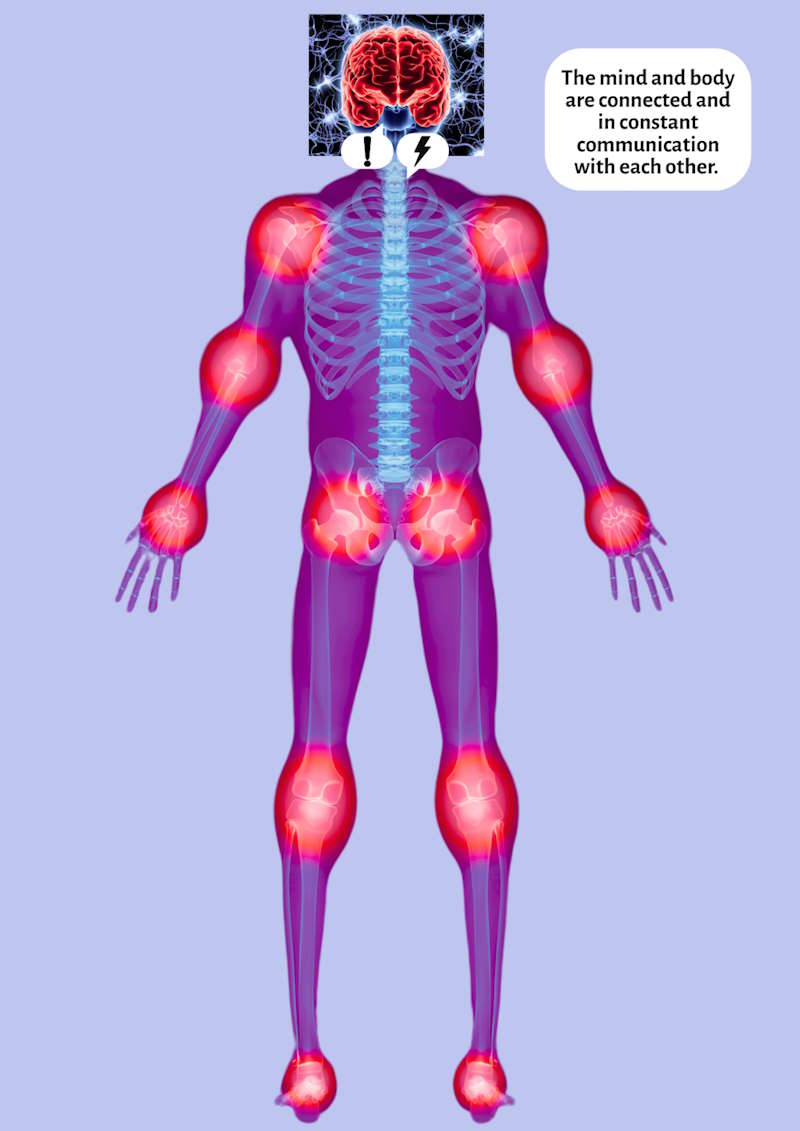
The symptom of fatigue (like the other symptoms of these chronic conditions) is caused by a build-up of suppressed emotions. This causes a sense of emotional threat within the body, which sends danger signals to the brain.
This can lead to the hypothalamus going into overdrive, causing haywire in communication between the different systems of the body so - instead of everything being regulated and working as it should - the stress response is working overtime, creating a biochemical marathon within the body.
This is why resting doesn’t restore energy levels.
And, if you could borrow energy from the next day, leaving you with a deficit to look forward to, would that not also mean that you could stockpile energy and be in excess by having a week in bed?
If you think so, go and tell some people with severe ME/CFS that - I’ll wait!
Next, this approach makes you focus on what you SPEND your energy (spoons) on and doesn’t take into consideration that some activities GIVE you energy, nevermind encouraging you to make these kinds of activities a priority in your life.
This feeds into the mindset of "I only have so much energy so I need to pace myself today" etc. as well as, "I'll use what energy I have for essential things and see if I have any left for me after all of that" (Spoiler alert: you won’t).
This, in turn, feeds the production of further symptoms as you inevitably spend your energy on doing too much that you don’t really want to be doing and forever postponing doing more of what you would love to do; more of what fills you up and meets your needs.
It all also encourages continued identification of being chronically ill which – consciously or subconsciously – discourages a recovery mindset, which means it keeps you ill instead of believing you can get better.
Many of you may believe you have to stay in this loop forever, believing that recovering fully and regaining your energy levels properly isn’t possible, which is wrong; it ABSOLUTELY IS possible to recover and, if this is news to you, you are going to want to read the linked article at the end which tells you more about this.
Another thing it does is encourages over-explanation to others about why you can or can’t do something, which - when you learn to care more about yourself and your truth than the opinions of others - is simply unnecessary.
When you are still thinking of others before yourself constantly, and feeling at the mercy of what they think and believe about you, it alters your behaviour; it pulls you out of alignment with who you are and makes you suppress yourself and your emotions, which can then cause more symptoms.
This is why I wholeheartedly believe that applying spoon theory and pacing does not work and, furthermore, actually does more harm than good in the long run.
I know that, if you don’t believe me about post exertional malaise being a myth and recovery being possible, you are going to disagree with me.
But, with all due respect, if you are hell-bent on continuing to believe that, then this blog isn’t aimed at you.
However, if what I say does resonate with you and you do believe me, then you’re going to want to know what I suggest you do to feel better, instead.
So, let me tell you right now, and then I’ll give you some real life examples which support everything I say.
If Pacing doesn’t work, what does?
Taking the real root cause seriously.
And use this as the basis of an approach which will aid recovery by dealing with, and reversing, the issue causing it.
What am I talking about?
To make it easier, I always break down what issues commonly cause the build up of suppressed emotions, leading to the manifestation of physical symptoms in people with these chronic conditions.
They are:
- Not meeting your needs with enough balance and variety,
- Boundary issues / Allowing unfair treatment,
- Suppressing the negative emotions caused by not being true to yourself and doing the above.
When you tackle these issues, in the right way, the emotional threat you were under passes and your emotional brain will stop sending danger signals to the hypothalamus in your brain. This means that fight or flight mode is switched off and the hypothalamus can go back to its job of keeping all of the systems in the body regulated, therefore, the biochemical marathon stops - and so do your symptoms.
Here’s an important thing to remember, especially when you are challenged on this: people with chronic fatigue conditions, who use the spoon theory and pacing, still have chronic fatigue - it’s not helping recovery.
Whereas, the opposite is true for those who do the opposite - turn it on its head and focus on what energises you and charges you up, first and foremost.
If you do that, you will have more energy.

What would be an improved and helpful version of Spoon Theory?
First, change the spoons to money - afterall, who the hell has ever paid for anything in spoons??
Think of energy like money - you can either spend more than you have (on things that drain you/don’t serve you/you don’t want to do), leaving you overdrawn, with interest and charges to be deducted as well, taking you further into a negative balance...
Or you can, first, invest it wisely - on things that you love and make you feel good - so that you actually get a return on it, allowing you to do more.
This is why meeting your needs forms an integral part of your recovery - it helps to keep your energy balance in the positive, where you can accrue more; as much as you need to be able to do what you want to do.
How can I be sure that this works?
I have been watching this play out again and again over the last decade, with 1-1 clients, in courses I have run on meeting needs and within a group membership I ran, where this was a main area of focus.
- I had a marathon runner, who became unable to run for a bus, nevermind her previous usual 25K, after developing CFS. Naturally, she started associating exertion with symptoms (as she was told to by their doctor). But we worked on her boundary and needs issues and, in doing so, also discovered that she had changed her running style. She had started running with her partner who trained at a different pace and she realised she wasn’t enjoying it. When she tried running her own way again after this, there was no issue.
- I had someone who played five-a-side football but started developing symptoms afterwards each week. Again, naturally he connected the exercise with his CFS symptoms. But, again, we worked on other, emotional stuff that was going on for him and he surprised himself by being able to play again with no ill-effects.
- I recently worked with a woman who loves hill-walking but would always “pay for it” the next day with a Fibro flare-up. We looked at her life and where she was still putting the needs of others before her own, to her detriment and she made some key changes. As a result, she now tunes into her body and her emotions and now feels good the day after hitting the hills, instead of being in pain.
- I’ve had a couple of clients who have always loved walking but their chronic condition brought fatigue which affected their ability to walk very far at all. But, on exploration, we discovered that this only happened when they were walking close to home - within a city - and that, when they were out walking in nature, it was a totally different story.
- I’ve had numerous clients who were practically housebound and felt unable to make plans or stray very far from their house, especially alone, when I started working with them. They all got their lives back and do things like go for long, daily walks in nature, run for buses to head into town for the day, take long trips on public transport, make (and honour) regular plans with friends, run their own business ventures that they started when their symptoms subsided…the list goes on and on.
What my clients discover, often through experimentation, is that when they are doing something they don’t want to do, it causes symptoms. But when they do things to meet their needs, with full permission from themselves, not only do they NOT get symptoms, but it actually reduces them and increases their energy levels.
You don’t have to be at the mercy of your illness.
The key is to acknowledge the role that emotional issues, and the resulting suppression of negative emotions over years and years, play in your condition.
Now you have a starting point from which to understand how the production of symptoms can be reversed.
If you are ready to take this information, build on it and start taking back control of your health, then everything you need to do this can be found in my Self-Paced, Online MECFS FIBRO Recovery Course.